Chicago - City of Big Shoulders

Chicago - City of Broad Shoulders


This course is about Chicago, We will cover the history of the city and region, the politics, corruption, arts, plans, neighborhoods, humor, achievements and the future of the City.

Potawatomi 1766-1836


The Potawatomi name means "those who keep/tend the hearth-fire," which refers to the hearth of the Council of Three Fires.
Fashion at the Field Museum in Chicago
The Potawatomi are mentioned in French records in the early 17th century where they lived in what is now southwestern Michigan. During the Beaver Wars they fled to the area around Green Bay to escape attacks by both the Iroquois and the Neutral Nation, who were seeking expanded hunting grounds.
As an important part of Tecumseh's Confederacy, Potawatomi warriors took part in Tecumseh's War, the War of 1812 and the Peoria War. Their allegiance switched repeatedly between the British and the Americans as power relations shifted between the nations.
At the time of the War of 1812, a band of Potawatomi inhabited the area near Fort Dearborn, in the current location of Chicago. Led by the chiefs Blackbird and Nuscotomeg (Mad Sturgeon), a force of about 500 warriors attacked the evacuation column leaving Fort Dearborn; they killed a majority of the civilians and 54 of Captain Nathan Heald's force, and wounded many others. George Ronan, the first graduate of West Point to become a fatal casualty in combat, was killed in this ambush. The incident is referred to as the Battle of Fort Dearborn. A Potawatomi chief named Mucktypoke (Makdébki, Black Partridge), counseled against the attack and later saved some of the civilian captives who were being ransomed by the Potawatomi.

French period (1615–1763) 

The French period of contact began with early explorers who reached the Potawatomi in western Michigan. They also found the tribe located along the Door Peninsula of Wisconsin. By the end of the French period, the Potawatomi had begun a move to the Detroit area, leaving the large communities in Wisconsin.


English period (1763–1783) 

The British period of contact began when France ceded its lands after the defeat in the French and Indian War (aka Seven Years War). Pontiac's Rebellion was an attempt by Native Americans to push the British and other European settlers out of their territory. The Potawatomi captured every British frontier garrison but the one at Detroit.

The Potawatomi nation continued to grow and expanded westward from Detroit, most notably in the development of the St. Joseph villages adjacent to the Miami in southwestern Michigan. The Wisconsin communities continued and moved south along the Lake Michigan shoreline.

United States treaty period (1783–1830) 

The United States Treaty period of Potawatomi history began with the Treaty of Paris (1783), which ended the American Revolutionary War and established the United States' interest in the lower Great Lakes. It lasted until the treaties for Indian Removal were signed. The US recognized the Potawatomi as a single tribe. They often had a few tribal leaders whom all villages accepted. The Potawatomi had a decentralized society, with several main divisions based on geographic locations: Milwaukee or Wisconsin area, Detroit or Huron River, the St. Joseph River, the Kankakee River, Tippecanoe and Wabash Rivers, the Illinois River and Lake Peoria, and the Des Plaines and Fox Rivers.


In 1984 the Village of Tinley Park, Illinois hosted a large Thanksgiving celebration.  They invited the Potawatomi who had moved to Oklahoma.  The intervening years had been good to the Potawatomi since we "borrowed" their land and sent them to Oklahoma. Seven Potawatomi returned in the tribal plane.  Several of them had blond hair and blue eyes.


The Citizen Potawatomi Nation has several tribal enterprises that provide services to our citizens and create a substantial economic impact in our communities. Our businesses further the success and prosperity of the Nation; provide employment opportunities for tribal citizens and revenue to support tribal operations.
Our enterprises provide the economic foundation to diversify and expand our current business operations and provide for expanded economic growth in our communities.
With more than 2,000 employees, Citizen Potawatomi Nation operates a variety of tribal enterprises including First National Bank, Grand Casino Resort, FireLake Discount Foods and the Community Development Corporation.

  1. Citizen Potawatomi Nation: Home

    www.potawatomi.org/‎

    The Citizen Potawatomi Nation is the federally-recognized government of the ... River, the Pottawatomie-Seminole County boundary (on the east), and the Indian ...
    News - Grocery and Travel - Tecumseh High Native Club ... - Language

  2. Potawatomi - Wikipedia, the free encyclopedia

    https://en.wikipedia.org/wiki/Potawatomi‎

    It lasted until the treaties for Indian Removal were signed. The US recognized thePotawatomi as a single tribe. They often had a few tribal leaders whom all ...
    Category:Potawatomi - Potawatomi language - Citizen Potawatomi Nation

  3. Pokagon Band of Potawatomi Indians - Wikipedia, the free ...

    en.wikipedia.org/wiki/Pokagon_Band_of_Potawatomi_Indians‎

    Pokagon Band of Potawatomi Indians are a federally recognized Algonquian-speaking Potawatomi-people located in southwestern Michigan and northeastern ...
  4. Images for potawatomi indians

     - Report images

  5. Facts for Kids: Potawatomi Indians (Pottawatomie) - Orrin's Website

    www.bigorrin.org/potawatomi_kids.htm‎

    Information about the Pottawatomie or Potawatomi Indians for students and teachers. Covers Potowatomi Indian food, shelter, clothing, crafts, and daily life in the ...

  6. Pokagon Band of Potawatomi

    www.pokagon.com/‎

    Official homepage of this Michigan band offers basic information about the tribe and its members.

  7. The Potawatomi Indians - Keepers of the Fire - Indians.org

    www.indians.org/articles/potawatomi-indians.html‎

    Learn why the Potawatomi Indians are known as the keepers of the fire.

  8. Potawatomi Indian Tribe History - Access Genealogy

    www.accessgenealogy.com/native/.../pottawatomie/pottawatomiehist.htm‎

    Potawatomi (J. B. Bottineau, speaking Chippewa and Cree fluently, gives Potawatanubńk or Potawaganińk, i. e. 'People of the place of the fire,' as the primary ...

  9. Potawatomi History - Indian Country Wisconsin

    www.mpm.edu/wirp/icw-152.html‎

    The Potawatomi are an Algonkian-speaking tribe which has lived in the Great Lakes region for at least four centuries. Oral traditions of the Potawatomi, Ojibwe, ...

  10. Prairie Band Potawatomi Nation

    www.pbpindiantribe.com/‎

    Homepage of this Kansas tribe includes cultural, historical, and government information, a section about the casino, and links.

  11. Nottawaseppi Huron Band of the Potawatomi

    nhbpi.com/‎

    For Our Support · Contact Us · Administration · Communications · Finance · Human Resources · Planning · Public Works · Government Records · Legal ...

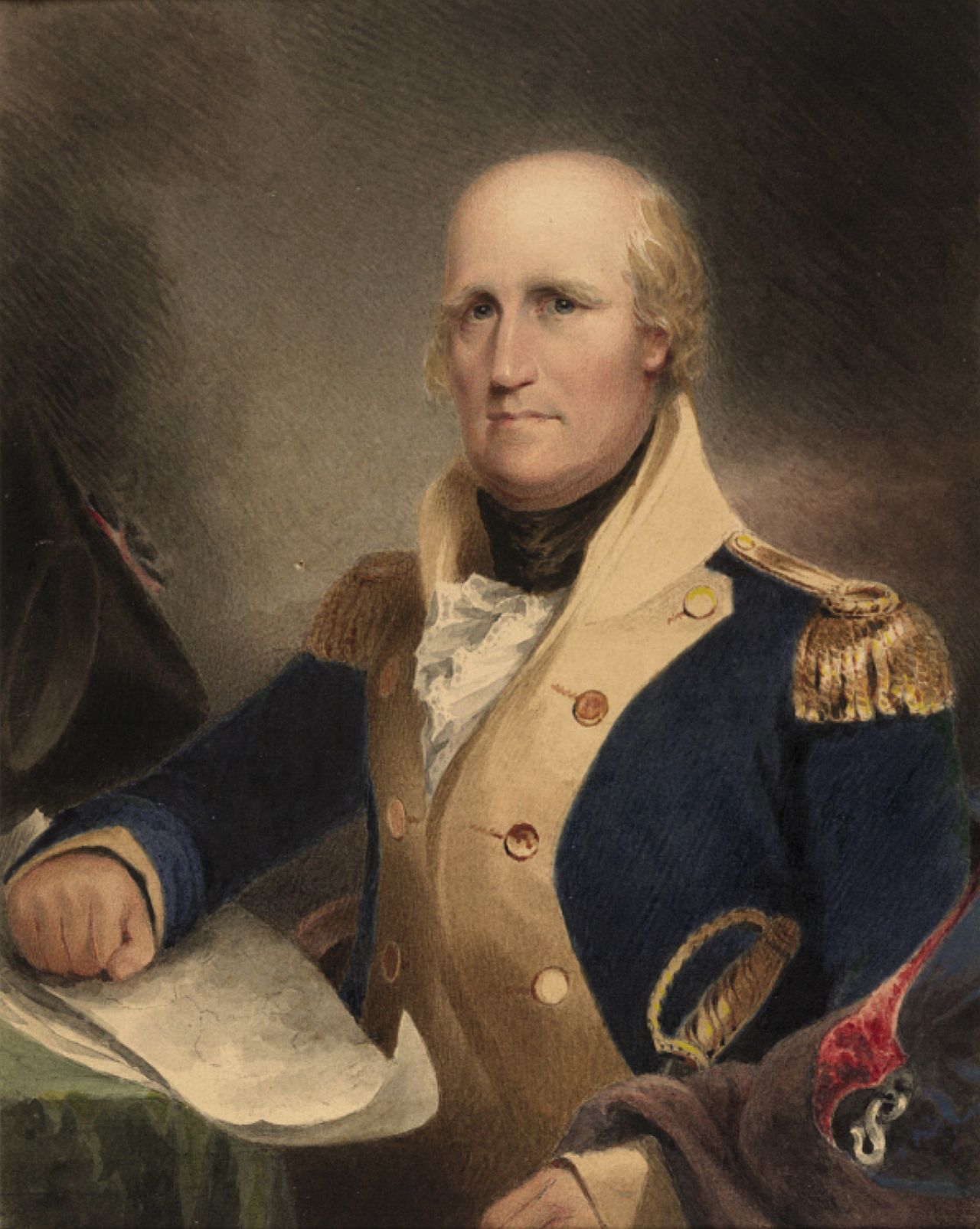
George Rogers Clark 1779

Lieutenant Colonel George Rogers Clark and his
frontiersmen captured Fort Sackville and British Lt. Governor Henry Hamilton on February 25, 1779. The heroic march of Clark's men from Kaskaskia on the Mississippi River in mid-winter and the subsequent victory over the British remains one of the great feats of the American Revolution.

Clark was hailed as the "Conqueror of the West", and much of the midwest was ceded by Great Britain to the new United States in the Treaty of Paris


Search Results


  1. George Rogers Clark - Wikipedia, the free encyclopedia

    en.wikipedia.org/wiki/George_Rogers_Clark

    George Rogers Clark (November 19, 1752 – February 13, 1818) was a soldier from Virginia and the highest ranking American military officer on the ...
    Early years - Revolutionary War - Later years - Legacy

  2. George Rogers Clark National Historical Park - National Park Service

    www.nps.gov/gero/

    Official National Park Service site. Information on the park and Vincennes, Indiana.

  3. George Rogers Clark - NNDB

    www.nndb.com/people/271/000049124/

    Clark gained the friendship of Father Pierre Gibault, the priest at Kaskaskia, and through his influence the French at Vincennes on the Wabash were induced ...

  4. IHB: George Rogers Clark Biography - State of Indiana


    www.in.gov/history/2958.htm

    George Rogers Clark was the second son of John and Ann Rogers Clark. Both families were Virginia landholders, and after their marriage they moved to a 400 ...

  5. About George Rogers Clark - Locust Grove

    www.locustgrove.org/aboutgrc.html

    About George Rogers Clark (1752-1818). At 26, George Rogers Clark was a confident frontiersman with a vision that would nearly double the size of his country ...

  6. George Rogers Clark Biography - Facts, Birthday, Life Story ...

    www.biography.com › People

    Visit Biography.com to learn more about George Rogers Clark and his battles during the American Revolution in the western territories against the British and ...

  7. Clark, George Rogers | Infoplease.com

    www.infoplease.com › ... › History › Biographies › US History: Biographies

    Clark, George Rogers, 1752–1818, American Revolutionary general, conqueror of the Old Northwest, b. near Charlottesville, Va.; brother of.

  8. American Revolution: Brigadier General George Rogers Clark

    militaryhistory.about.com › ... › Biographies › Army › American Revolution

    Brigadier General George Rogers Clark was an American leader during the American Revolution. Campaigning in the Old Northwest, Clark won key victories ...

  9. A Biography of George Rogers Clark - Silver Creek High School

    www.silvercreek.wclark.k12.in.us/.../Clark/mgood/GRCbiography.htm

    The younger George. George Rogers Clark was born the second son of John and Ann Rogers Clark in 1752. He lived on a 400 acre farm until he was about 5, ...
Newer Posts Older Posts Home
Subscribe to: Posts (Atom)

Search This Blog

Table of Contents

Early History

  • Introduction

  • Table of Contents

  • Glaciers and Geography

  • Location, Location, Location

  • Paleo Indians - First Chicagoans

  • Native American Trails

  • Trail Marker Trees

  • Historic Native Americans

  • The lllinois Confederation or Illini

  • Marquette and Joliet 1673

  • Illinois and French Colonists

  • The Illinois and Fox Wars 1730

  • Pontiac's War 1763-1766

  • Illini - The End Starved Rock 1769

  • The Pottawattamie 1766-1836

  • George Rogers Clark 1779

  • Jean Baptist du Sable 1788

  • Fort Dearborne Massacre of 1812

  • The Blackhawk War of 1832

  • Chicago Incorporated 1833

  • I and M Canal 1824-1848

  • The Great Chicago Fire 1871

  • Chicago History Snapshot

  • Historical Populations


Politicians

  • Clout

  • The Cost of Clout

  • Where's Mine?

  • List of Mayors

  • Hinky Dink 1897 to 1923

  • Bathhouse John 1893-1938

  • Mayor Big Bill Thompson 1915-1931

  • Mayor Anton Cermak 1931-33

  • Mayor Richard J. Daley 1955-1976

  • Mayor Jane Byrne 1979-1983

  • Mayor Harold Washington 1983-1987

  • Mayor Richard M. Daley 1989-2010

  • Mayor Rahm Emmanuel

  • President Abraham Lincoln and Chicago

  • President Barak Obama and Chicago

  • Lincoln's Statue in Grant Park

  • Greylord 1980's


Crooks

  • Chicago - Most Corrupt City

  • Our Governors Make License Plates

  • H. H. Holmes - 1893

  • FBI - Chicago

  • Al Capone

  • Frank Nitti

  • St Valentine's Day Massacre

  • Top 5 Gansters in Chicago

  • Tony Accardo

  • John Wayne Gacey

  • Operation Greylord

  • Street Gangs

  • Crime Rates

  • Murders and Gang Wars


Writers and Pundits

  • Mike Royko

  • Carl Sandburg

  • Carl Sandburg Poems

  • Saul Bellow

  • Dr. Milt Rosenburg

  • Dr. Paul Green

  • Andrew Greeley

  • Chicago Authors


Transportation

  • The Grid Plan

  • Plank Roads

  • Horse Drawn Trolleys

  • Cable Cars

  • Street Cars

  • Railroads

  • Commuter Railroads

  • The "EL" Elevated Railroads

  • Electric Interurban

  • Trails to Rails

  • Interstate System

  • Address System


Miscellaneous

  • Quotes

  • Fire South Side

  • Lakefront - Forever Free and Clear

  • Reversing the Chicago River

  • Great Lakes Megalopolis

  • The World's Fair 1893

  • Daniel Burnham

  • The Burnham Plan of 1909

  • The Deep Tunnel Plan

  • Urban Renewal

  • Historic Photos

  • Public Housing


Neighborhoods

  • Neighborhoods

  • The Gold Coast

  • Lincoln Park

  • Greek Town

  • Little Italy / University Village

  • China Town

  • Hyde Park / The University of Chicago

  • Mount Greenwood

  • Beverly / Morgan Park

  • Pullman

  • Demographic Change


Suburbs

  • University Park Governors State U

  • Tinley Park

  • Geneva

  • Riverside

  • Wilmette


Airports

  • Meig's Field - Closed in the Night

  • Midway Airport

  • O'Hare Airport

  • The New Third Airport


Museums

  • Field Museum

  • Museum of Science and Industry

  • Art Institute

  • Sculpture


Music

  • Chicago, Chicago, A Toddling Town

  • Good Morning, America, How Are You?

  • Bad, Bad, Leroy Brown, Baddest Man

  • Chicago Blues

  • List of Songs About Chicago


Movies

  • Top 40 Chicago Movies

  • The Blues Brothers


Miscellaneous

  • Historic Photos

  • Your Recommendations for Chicago

  • Sustainable Chicago


Interesting Articles

  • The Death and Life of Chicago


Bragging Rights

  • Chicago Number 6 in the World

  • Nobel Laureate U of C Number 2

  • Jane Adams Hull House


Things to Do

  • Things to Do


Class-Presentations (20 minutes,

90 Minutes of Discussion +-)


  1. chicagocityofbigshoulders1.blogspot.com

  2. chicagocityofbigshoulders2.blogspot.com

  3. chicagocityofbigshoulders3.blogspot.com

  4. chicagocityofbigshoulders4.blogspot.com

Videos

  • Chicago Videos
  • Al Capone
  • Chicago Statistics
  • Chicago Tourism
  • Cityscape Chicago on Vimeo
  • What To See In Chicago
  • Bad Bad Leroy Brown

Class at Pierian Spring Academy

Chicago - Stormy, Husky, Brawling, City of the Big Shoulders

This course will be about Chicago. We will cover the history of the city and region, the politics, the corruption, the arts, the plans, and the achievements of the City. We will discuss current events.

Pierian Spring

In Greek mythology, the Pierian Spring of Macedonia was sacred to the Muses. As the metaphorical source of knowledge of art and science, it was popularized by a couplet in Alexander Pope's poem "An Essay on Criticism" (1709): "A little learning is a dang'rous thing;/Drink deep, or taste not the Pierian spring."

Pierian Springs

  • Web Site

Popular Posts

  • List of Chicago Mayors
    The mayoral term in Chicago was one year from 1837 through 1863, when it was increased to two years. In 1907 it was again lengthened to f...
  • The Illinois Confederation / Illini / Illiniwek
    The Illinois Native Americans owned most of Illinois when the first French explorers and fur traders moved into the area.  The Illinois wer...
  • Location, Location, Location
    Why has Chicago  grown so rapidly?  Location, Location, Location. The map below shows water way links in the United States.  Chicago is nea...
  • Deep Tunnel 1972 - 2029
    The Deep Tunnel Plan constructs a series of large tunnels underneath Chicago.  The system is designed so that when the surface is flood...
  • Raising Chicago
    Chicago was built on a swamp adjacent to Lake Michigan and the Chicago River. Poor drainage caused flooding and typhoid fever and ...
  • St. Valentine's Day Massacre
    The  Saint Valentine's Day Massacre  is the name given to the 1929 murder of seven mob associates as part of a -era conflict between ...
  • Commuter Railroads
  • Mike Royko
    Mike Royko was a Chicago institution who became, in Jimmy  Breslin's words, "the best journalist of his  time." He knew Chica...
  • Fort Dearborn Massacre 1812
    August 15, 1812  From roughly 1620 to 1820 the territory of the Potawatomi extended from what is now Green Bay, Wisconsin, to Detroit,...
  • Chicago Racial Demographics 1910-2000
    ( View each year's map as a still image .) Interesting to watch the changes in Chicago. In 1900 the neighborhoods were over 90...

Chicago Tribune

Things to Do in Chicago

World Biz Chicago

Blog Archive

  • ▼  2015 (2)
    • ▼  February (1)
      • Introduction
    • ►  January (1)
  • ►  2014 (21)
    • ►  January (21)
  • ►  2013 (187)
    • ►  November (21)
    • ►  October (8)
    • ►  July (20)
    • ►  June (16)
    • ►  May (55)
    • ►  April (67)
  • ►  2012 (1)
    • ►  February (1)

Total Pageviews

City Planning Blog

  • CityPlanningNews.com

Chicago High School Blog

  • EMPEHI.COM

Craig Hullinger AICP


Craig Hullinger is a City Planner from Chicago. He lived and worked in the Chicago region most of his career. He is a former member the American Institute of Certified Planners and a retired Marine Colonel.

craighullinger.com

craighullinger@gmail.com

309 634 5557
Simple theme. Powered by Blogger.